China’s foldable mobility devices are changing how users move through crowded cities, narrow apartments, and busy airports. But what are the advantages of foldable mobility devices beyond simple convenience? Their compact frames can fit inside car trunks, under desks, or beside a restaurant table. That small footprint matters during real travel.
Dr. Rory Cooper, a renowned wheelchair researcher and founder of the Human Engineering Research Laboratories, has said, “The wheelchair is an extension of the person.” This perspective helps explain why portability should not replace comfort, stability, or proper fit. A lightweight folding wheelchair or mobility scooter may reduce lifting effort and simplify storage. Some models also include adjustable footrests, removable batteries, electromagnetic brakes, and reinforced frames. These details can make a visible difference on uneven sidewalks or during public transport.
The benefits are practical. Users may gain greater independence, easier home storage, and fewer barriers during short trips. Caregivers can experience less physical strain when loading equipment into a vehicle. However, folding designs are not automatically better. Small wheels may struggle on rough ground. Lightweight materials can reduce durability if poorly engineered. Battery range may also disappoint in cold weather or on steep streets.
That is the honest part.
Buyers should check weight capacity, folded dimensions, braking performance, battery certification, warranty support, and after-sales service. Chinese manufacturers offer many options, but quality varies between suppliers. Reliable decisions require product testing, transparent specifications, and advice from qualified rehabilitation professionals. A foldable device should support daily life, not merely look convenient in a product photograph.
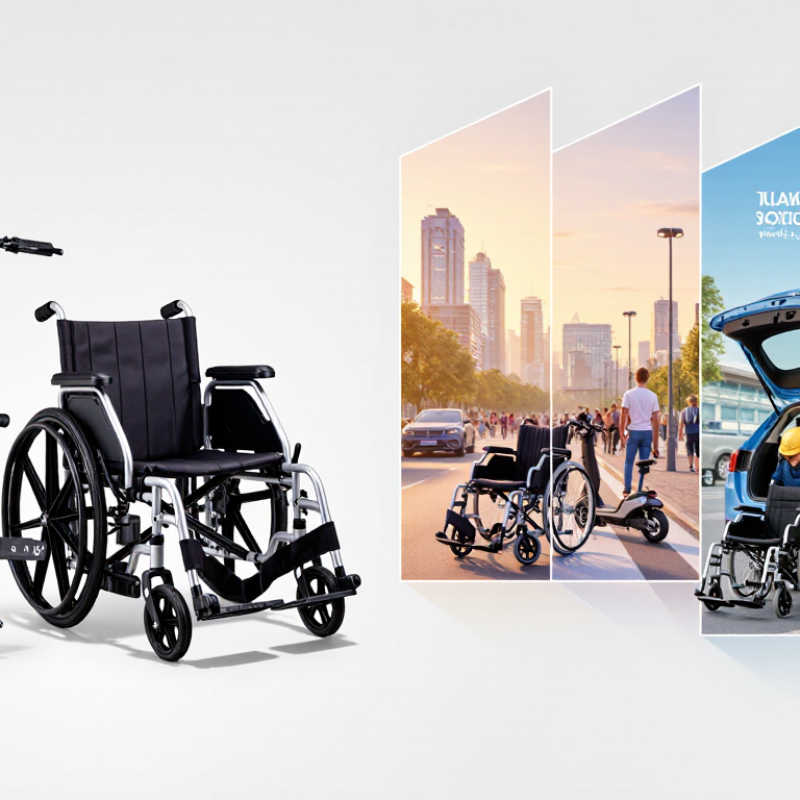
China foldable mobility devices are portable aids manufactured in China and designed to support walking, sitting, or powered movement. Their defining feature is a folding structure that reduces storage space and simplifies transport. Common examples include folding wheelchairs, compact mobility scooters, folding walkers, and portable power chairs.
Folding wheelchairs usually suit users who need seated support during travel or daily movement. Some models use lightweight frames, removable footrests, and quick-release wheels. Folding walkers and rollators help users maintain balance while walking. Rollators often include hand brakes, a seat, and a small storage basket. Compact mobility scooters and portable power chairs use rechargeable batteries. They may help users travel across shopping areas, transport hubs, or large indoor spaces.
A practical check matters more than appearance. The device should match the user’s weight, height, strength, and usual terrain. Test the folding mechanism several times. It should lock firmly without excessive force. Check brake response, wheel stability, battery details, and charging instructions. A lighter frame is not always better. It may feel less stable on uneven ground. Battery range can also vary with temperature, load, slopes, and tire pressure. Foldable does not mean effortless. Some users may need help lifting the device into a vehicle. Clear manuals, traceable product information, and compliance with applicable safety requirements support more reliable purchasing decisions.
Main types include folding manual wheelchairs, rollators, mobility scooters, and powered wheelchairs. Their foldable structures improve storage, transport, and space efficiency.
The chart shows representative folded-width ranges commonly found across non-branded mobility-device categories. Smaller folded widths generally make a device easier to place in a vehicle, store indoors, or transport when not in use. Actual specifications vary by design, battery configuration, seat size, and safety requirements.
China’s foldable mobility devices are developed around portability, controlled production, and practical daily use. The WHO and UNICEF Global Report on Assistive Technology (2022) estimates that more than 2.5 billion people need at least one assistive product. Demand may exceed 3.5 billion by 2050. This pressure encourages manufacturers to reduce folded size without weakening essential support.
Design teams usually begin with user measurements, weight targets, and transport conditions. Engineers test aluminum or steel frames through cutting, CNC forming, welding, and surface treatment. Folding hinges receive repeated opening and closing tests. Brakes, wheels, armrests, and seat locks are checked separately. Many factories also use load, vibration, and slope testing, referencing ISO 7176 principles for wheelchair performance. Battery-powered models require additional electrical and charging inspections. Small details matter, such as a handle that remains comfortable after a long airport transfer.
Tips: Ask for folded dimensions, net weight, maximum user weight, brake testing, and inspection records. Check whether replacement parts are available. A low quoted price may hide weaker hinges or inconsistent finishing. No production line is perfect, and quality can vary between batches. Buyers should request sample testing, factory audit evidence, and clear acceptance standards before placing a large order. Feedback from real users should return to the design team, even when it exposes uncomfortable weaknesses.
China foldable mobility devices can make transport less stressful when their design matches real daily routines. A compact model may fit beside a suitcase or inside a small car trunk. It folds quickly. This matters in crowded stations, narrow elevators, and shared living spaces. Look beyond folded size, however. Check the actual weight, carrying points, wheel placement, and whether one person can lift it safely. A removable battery can simplify storage and transport, but users should confirm charging instructions and local transport rules.
Storage becomes easier when the device stands securely without leaning against furniture. Smooth folding joints also reduce scraped floors and trapped fingers. For daily mobility, practical details matter more than impressive specifications.
A tight turning radius helps in kitchens and small shops. Reliable brakes support safer pauses on gentle slopes. Comfortable seating, adjustable controls, and steady foot support can reduce fatigue during short outdoor trips. Pavement gaps still deserve attention. Folding does not remove every mobility challenge.
Professional evaluation should include repeated folding, brake checks, battery inspection, and tests on different surfaces. Ask for clear technical documents, maintenance guidance, and applicable safety certifications. Some lightweight frames may feel less stable for heavier users. That trade-off is easy to overlook. Users should compare rated capacity, ground clearance, tire design, and repair access before buying. One weakness remains important: a device that is convenient to store may sacrifice range or suspension. Careful measurement at home can prevent an expensive mismatch.
Foldable mobility devices made in China often combine compact design with practical daily support. Their frames can fold for car trunks, apartment storage, or public transport. However, a small frame does not automatically mean safer handling. Look for reliable brakes, stable wheels, anti-tip protection, and clear battery indicators. A controlled turning radius also matters in narrow hallways and crowded shops.
Comfort affects confidence during longer trips. A supportive seat, adjustable armrests, and a padded backrest can reduce pressure on the hips and shoulders. Controls should remain visible and usable with limited hand strength. Some models provide adjustable speed settings, which help users move carefully near doors or uneven pavements. Still, cushioning may feel too firm for certain body types. Testing the seating position is wise.
Accessibility features should match real surroundings, not showroom promises. Check the folded weight before lifting it into a vehicle. Confirm whether the device fits through your doorway and under your worktable. Battery range can change with hills, cold weather, passenger weight, and frequent stops. Ask for safety documentation, charging guidance, warranty terms, and replacement-part support. A lower purchase price may be useful, but weak after-sales service can become expensive and frustrating. Safety needs evidence.
Choosing a suitable China foldable mobility device starts with the user, not the catalogue photo. Measure doorways, lift space, and the distance between furniture. A compact frame is useful only when it fits your daily route.
Check the folded size, total weight, seat width, and maximum user load. Ask whether one person can lift it safely into a car. A device weighing 25 kilograms may be portable for some users, but tiring for others. Test the folding latch several times. It should lock firmly without excessive force. Small wheels may work indoors, while larger solid wheels handle uneven pavements better. Think about real surfaces. Tiles, ramps, gravel, and wet ground feel very different.
Battery details deserve careful attention. Confirm the battery type, charging time, expected range, and replacement process. Request clear test documents and user instructions from the supplier. The relevant safety requirements may differ between countries, so verify local rules before purchase. Check the warranty, spare-part availability, repair response, and packaging protection. These details often matter more than a low initial price. I once focused too much on folded dimensions and overlooked seat support. That was a poor choice. Comfort should be tested after thirty minutes, not three. Ask for a live video demonstration when an in-person inspection is impossible. Vague answers are a warning sign. Reliable suppliers provide consistent specifications, inspection records, and practical after-sales contact.
| Device Type | Typical Folded Size | Typical Product Weight | Typical User Capacity | Typical Travel Range | Typical Maximum Speed | Main Advantages | Best Suited For |
|---|---|---|---|---|---|---|---|
| Folding Manual Wheelchair | Approx. 75–95 × 30–40 × 70–95 cm | Approx. 8–18 kg | Approx. 100–150 kg | Not applicable; manual propulsion | Depends on user or attendant | Lightweight, simple construction, easy to fold, low operating cost, and no battery charging required | Indoor use, assisted transport, short trips, and users with sufficient upper-body strength |
| Folding Transport Chair | Approx. 65–85 × 25–35 × 65–90 cm | Approx. 6–12 kg | Approx. 90–130 kg | Not applicable; attendant propelled | Controlled by attendant | Very portable, easy to lift, compact for vehicle storage, and suitable for occasional use | Hospitals, airports, shopping centers, travel, and users who need assistance from a caregiver |
| Folding Power Wheelchair | Approx. 65–85 × 35–45 × 70–85 cm | Approx. 18–35 kg, depending on battery | Approx. 100–150 kg | Approx. 10–25 km per charge | Usually up to 6 km/h | Powered mobility, compact storage, joystick control, and reduced physical effort | Users with limited arm strength who need independent indoor and outdoor mobility |
| Folding Mobility Scooter | Approx. 65–90 × 45–60 × 70–85 cm | Approx. 20–35 kg, depending on battery | Approx. 100–150 kg | Approx. 15–30 km per charge | Usually 6–8 km/h | Comfortable seated operation, good travel convenience, and better range than many compact powered chairs | Outdoor paths, shopping areas, travel, and users who prefer a tiller rather than joystick control |
| Folding Rollator Walker | Approx. 60–75 × 25–35 × 75–95 cm | Approx. 5–10 kg | Approx. 100– be 150 kg | Not applicable; user propelled | Depends on user | Lightweight support, integrated seat options, easy folding, and convenient storage | Users who can walk but need balance support and occasional seated rest |
| Selection Factor | What to Check | Recommended Choice |
|---|---|---|
| Portability | Folded dimensions, lifting weight, removable battery, and whether it fits the intended vehicle | Choose a lighter manual chair or transport chair for frequent lifting; choose a powered model when independent movement is more important |
| Travel Distance | Battery range under realistic conditions, including user weight, temperature, slopes, and stop-start travel | Select a mobility scooter or power wheelchair with a stated range exceeding the normal daily route by a safety margin |
| Terrain | Wheel size, ground clearance, turning radius, maximum gradient, and outdoor tire design | Use a compact model for smooth indoor surfaces; choose larger wheels and stronger drive systems for uneven outdoor paths |
| Comfort and Fit | Seat width, seat depth, back support, armrests, legroom, cushioning, and adjustability | Match the device to the user’s body measurements and expected sitting time rather than choosing by folded size alone |
| Safety | Braking system, anti-tip wheels, seat belt, lighting, reflectors, stability, and overload protection | Prioritize tested safety features and confirm that the rated capacity exceeds the combined user and carried-load weight |
| Battery and Charging | Battery type, charging time, charging location, airline or transport requirements, and replacement availability | Choose a removable lithium battery for easier transport only when it meets the applicable carrier and local transport rules |
Note: Specifications are typical ranges for comparable foldable mobility devices and can vary by configuration, battery, user load, terrain, and applicable safety regulations. Always verify the final technical specification and compliance documents before purchase.
They fold for car trunks, apartment storage, and public transport. Smaller frames can simplify daily travel. Portability still has limits.
Manufacturers often use aluminum or steel frames. Production may include cutting, CNC forming, welding, and surface treatment. Finishing quality can vary between batches.
Check reliable brakes, stable wheels, anti-tip protection, and secure seat locks. Test the folding hinge repeatedly. Ask for inspection records.
Check seat width, backrest support, armrest adjustment, and control visibility. Sit for thirty minutes, not three. A firm cushion may suit one body and trouble another.
Measure doorways, lift space, furniture gaps, and worktable clearance. Compare them with the device’s folded dimensions. A showroom fit proves little.
Confirm battery type, charging time, expected range, and replacement procedures. Range may shrink on hills, cold days, or frequent stops. Ask for clear charging instructions.
A 25-kilogram device may be manageable for one person and exhausting for another. Test whether one person can lift it safely. I once ignored this detail.
Request warranty terms, spare-part availability, repair response times, and protective packaging details. Ask for a live video demonstration when inspection is impossible. Vague answers deserve caution.
China foldable mobility devices include folding wheelchairs, mobility scooters, walkers, and other compact solutions designed to support people with limited mobility. Manufactured in China through coordinated design, material selection, component assembly, and quality testing, these devices often combine lightweight frames with practical folding mechanisms. This makes them easier to transport in cars, store at home, or use during travel and daily activities. So, what are the advantages of foldable mobility devices? Their main benefits include space efficiency, portability, flexible use, and improved convenience for users and caregivers.
When choosing a suitable device, users should consider weight, folded size, carrying method, battery performance where applicable, and the terrain it is designed to handle. Safety features such as reliable brakes, stable frames, secure locking systems, visibility elements, and supportive seating are also important. Comfort, adjustable components, easy controls, and accessibility should match the user’s physical needs. By comparing these factors carefully, buyers can select a dependable foldable mobility device that supports independence while fitting smoothly into everyday routines.

Kidvora Chair