When considering mobility needs, many ask, "what is the difference between indoor and outdoor wheelchairs?" This question is crucial for those seeking the right fit for their lifestyle. Indoor wheelchairs are designed with maneuverability in mind. They are typically lighter and have smaller turning radii. These features allow for easy navigation in tight spaces like homes or offices.
Outdoor wheelchairs, on the other hand, are built to conquer tougher terrains. They have larger wheels and more robust frames. This design makes them suitable for uneven surfaces found in parks or city streets. The choice between these two types is not merely about comfort; it involves assessing one’s daily activities and environment.
Each type has its strengths and weaknesses. Indoor wheelchairs may lack the durability needed outdoors, while outdoor models can be cumbersome in confined spaces. Understanding these differences is essential for users seeking independence and mobility in various settings.
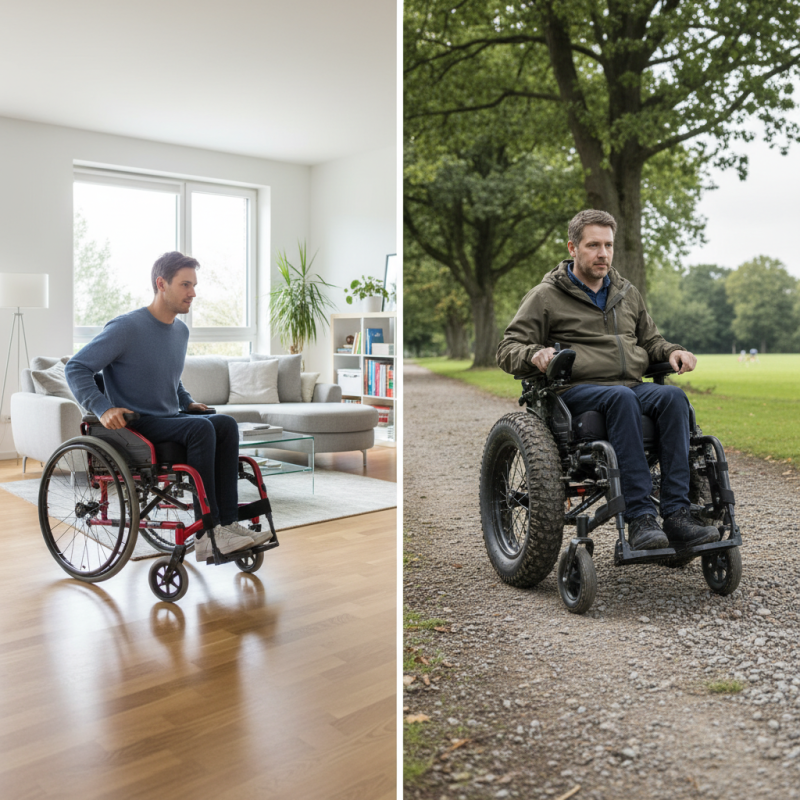
Indoor wheelchairs are specifically designed for use in confined spaces. Their smaller frames make maneuvering through tight areas, like hallways or doorways, much easier. The seating in indoor wheelchairs often features lower seat heights. This aspect allows users to access furniture like tables and desks comfortably.
Another important design feature is the wheels. Indoor wheelchairs typically have smaller, softer tires. These tires are ideal for smooth surfaces, ensuring a quieter ride. They also tend to have more stability indoors. However, this stability can sometimes limit outdoor performance. Users have reported frustrations when trying to navigate uneven terrains.
The overall weight of indoor wheelchairs is usually lighter. This quality makes them easier for caregivers to lift and transport. Adjustments in armrest height can also enhance comfort during long periods of sitting. Yet, some users find these adjustments inadequate for their needs. Individual comfort varies widely, which is an essential consideration when choosing a wheelchair.
Outdoor wheelchairs are designed for durability and adaptability to various terrains. They often feature robust frames and puncture-resistant tires. This construction ensures they withstand rough surfaces like gravel and grass, making them ideal for outdoor activities.
The adaptability of outdoor wheelchairs lies in their shock-absorbing suspension systems. These systems provide a smoother ride over bumpy paths, enhancing user comfort. Additionally, many models have larger wheels that can navigate obstacles more effectively. However, some users may find them heavier and harder to maneuver indoors.
Choosing the right wheelchair requires careful consideration of lifestyle needs. Users should assess their environments, as not all models fit every situation. Reflecting on where you will use the chair most can guide your decision. A balance must be struck between functionality and ease of use.
This bar chart illustrates the key advantages of indoor and outdoor wheelchairs across various dimensions. Outdoor wheelchairs generally excel in durability and terrain adaptability, making them suitable for diverse environments, while indoor wheelchairs offer better maneuverability due to their compact size.
When comparing indoor and outdoor wheelchairs,
size and maneuverability stand out as critical differences.
Indoor wheelchairs are typically narrower, allowing for easy navigation through tight spaces.
A standard indoor model averages about 22 inches in width.
In contrast, outdoor wheelchairs can be wider, often at 24 to 30 inches,
enhancing stability but limiting indoor access.
This difference can significantly impact a user’s daily life, especially in urban settings where space is often constrained.
Maneuverability also varies greatly between the two types.
Indoor wheelchairs focus on agility, featuring smaller turning radii, often around 30 inches.
Outdoor wheelchairs are optimized for rough terrain, with larger turning capabilities.
Reports indicate that outdoor models improve mobility on uneven surfaces by over 50%.
This adaptation leads to a trade-off; while comfort and stability increase outdoors,
space limitations indoors can pose challenges.
The choice often depends on individual needs.
Users might prioritize comfort during outdoor activities but struggle with navigating home interiors.
The design must balance these competing demands.
Professionals emphasize user assessments to determine the best fit,
ensuring safety and usability in different environments.
Weight capacity is a crucial factor when choosing between indoor and outdoor wheelchairs. Indoor models are often lighter and designed for maneuverability. They typically support lower weight limits, usually around 250 pounds. This limitation can restrict users with heavier body weights. In contrast, outdoor wheelchairs are built for durability and often have a higher weight capacity. Many can support weights up to 400 pounds or more, making them suitable for a broader range of users.
Understanding load handling is essential for choosing a wheelchair. Indoor wheelchairs excel in tight spaces and smooth surfaces, while outdoor models handle uneven terrain better. However, outdoor options can be bulkier, affecting indoor use. Weight capacity impacts stability. A user approaching the limit may experience safety issues during use. It's vital to consider not just weight but the nature of daily activities. Users must reflect on their needs. Are they primarily indoors, or is venturing outside a priority? Such considerations will guide the right choice.
| Feature | Indoor Wheelchairs | Outdoor Wheelchairs |
|---|---|---|
| Weight Capacity | 250 lbs | 350 lbs |
| Material | Aluminum Frame | Steel Frame |
| Tire Type | Solid Tires | Pneumatic Tires |
| Weight | 40 lbs | 60 lbs |
| Maneuverability | High | Moderate |
| Seat Width | 18 inches | 20 inches |
| Armrest Type | Fixed | Adjustable |
| Footrest | Swing-away | Removable |
| Portability | Easy to fold | Difficult to transport |
| Cost | $300 - $500 | $600 - $800 |
Indoor and outdoor wheelchairs serve different purposes, which greatly affects their maintenance needs. Indoor wheelchairs often have smaller dimensions. They are designed to navigate tight spaces with ease. In comparison, outdoor wheelchairs typically feature larger tires and more robust frames. This allows them to handle various terrains. According to industry reports, outdoor chairs require cleaning after exposure to dirt and moisture. Indoor models are easier to maintain in clean environments.
The care requirements for each type of wheelchair differ significantly. Indoor wheelchairs can often be wiped clean with mild cleaning solutions. Yet, outdoor wheelchairs require more rigorous maintenance. Dust, debris, and weather exposure can degrade performance if not cleaned regularly. It’s recommended to inspect outdoor models frequently—approximately every three months.
This is essential to ensure the integrity of wheels and brakes. Data shows that neglecting this routine can lead to costly repairs.
Another aspect to consider is the wear and tear on components. Indoor wheelchairs may last longer due to reduced exposure. Conversely, outdoor wheelchairs can experience extensive wear on their tires and brakes. Users often overlook this, leading to unexpected breakdowns. Regular inspection and maintenance can mitigate risks and enhance safety. Ultimately, knowing these differences helps users make informed decisions about maintenance needs.
: Indoor wheelchairs are specifically designed for use in confined spaces, like homes and buildings.
Their smaller frames make it easier to maneuver through tight areas, like hallways and doorways.
Indoor wheelchair seating often has lower seat heights for comfortable access to tables and desks.
Indoor wheelchairs have smaller, softer tires, ideal for smooth surfaces and a quieter ride.
While stable indoors, they often struggle on uneven terrains, frustrating some users.
Outdoor wheelchairs offer durability with robust frames and puncture-resistant tires for rough surfaces.
It provides a smoother ride over bumpy paths, enhancing overall user comfort during outdoor activities.
Some users find outdoor wheelchairs heavier and harder to maneuver in confined spaces.
Assess your environment and lifestyle, as not all models fit every situation appropriately.
Individual comfort varies widely, so finding the right fit is crucial for long-term satisfaction.
When exploring what is the difference between indoor and outdoor wheelchairs, it’s essential to consider various factors such as design, functionality, and durability. Indoor wheelchairs are typically designed for compact spaces, allowing for enhanced maneuverability and ease of navigation in tight environments. They often feature lighter frames and more streamlined designs, prioritizing indoor settings over rough terrains.
On the other hand, outdoor wheelchairs offer advantages that cater to durability and terrain adaptability. They are built to withstand various outdoor conditions, with robust frames and larger wheels that can handle uneven surfaces. Size, weight capacity, and maintenance needs also differ significantly; outdoor wheelchairs generally support higher weight limits and require more intensive care to ensure longevity in harsher environments. Understanding these key differences helps users choose the right wheelchair to suit their specific mobility needs.

Kidvora Chair