Selecting the appropriate wheelchair can significantly impact mobility and freedom for users. Understanding what terrain is suitable for different wheelchair types is crucial for maximizing accessibility and enjoyment. Each wheelchair is designed for specific environments, which can greatly influence user experience. For instance, manual wheelchairs often perform best on smooth surfaces, such as sidewalks and indoor spaces. Meanwhile, powered chairs may handle uneven terrain better due to their robust design and features.
However, factors like the user’s strength and mobility must also be considered. Not all environments are accommodating, and some users may find challenges even on seemingly accessible paths. It is essential to reflect on personal needs and preferences when evaluating wheelchair suitability for specific terrains. Complications may arise in areas with gravel or steep hills, which can lead users to rethink their choices. Thus, understanding what terrain is suitable for different wheelchair types is key to enhancing both comfort and independence for users navigating diverse landscapes.
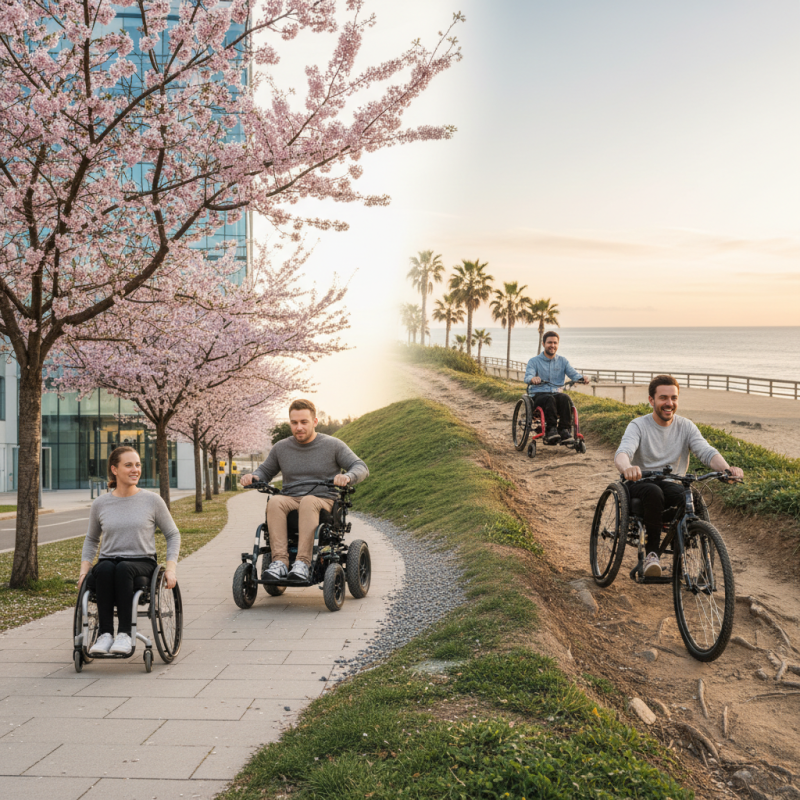
Different types of wheelchairs serve unique needs and environments. Manual wheelchairs are lightweight and excellent for indoor use. They offer great mobility in tight spaces. These chairs require user effort, making them ideal for those who can propel themselves.
Power wheelchairs bring a different dynamic. They are suited for outdoor use thanks to their robust design. With powerful motors, they handle rough terrain well. However, users must consider battery life for longer excursions.
All-terrain wheelchairs are built to navigate diverse landscapes. These models often feature larger tires for stability. They allow users to explore beyond paved paths. However, heavier and bulkier, they may not fit easily in standard doorways. Balancing functionality and convenience remains a challenge. Each type has its quirks, which can lead to difficult decisions for users.
| Wheelchair Type | Best Terrain | Features |
|---|---|---|
| Manual Wheelchair | Smooth Surfaces | Lightweight, easy to maneuver, suitable for indoor use. |
| Electric Wheelchair | Paved Roads, Slight Inclines | Power-assisted, ideal for longer distances and outdoor use. |
| All-Terrain Wheelchair | Uneven Terrain, Trails | Robust tires, suspension system, designed for rough conditions. |
| Sports Wheelchair | Sports Courts, Tracks | Specialized for speed and agility, lightweight frame. |
| Child Wheelchair | Smooth Indoor Surfaces | Adjustable features for growth, designed for comfort. |
When selecting a wheelchair, understanding terrain is essential. Different terrains can significantly impact mobility and comfort. Smooth surfaces, like sidewalks or indoor areas, are ideal for most manual and powered wheelchairs. They provide easy maneuverability and reduced effort for users. Reports indicate that over 70% of wheelchair users prefer smooth environments for daily navigation.
Rough terrains pose challenges. Gravel paths, uneven sidewalks, or grass can hinder wheelchair movement. Studies show that users on rough surfaces often struggle, resulting in fatigue and frustration. Many wheelchairs designed for rough terrains feature larger wheels and suspension systems. However, this may not suit everyone’s needs and can be costly.
Tips: When encountering rough terrain, consider using a wheelchair with active wheels for better control. Practice balancing and steering on uneven surfaces to increase confidence. Always evaluate routes ahead to avoid unexpected difficulties. Exploring mixed terrains requires adaptability. A user's choice of wheelchair should align with expected environments. It’s essential to reflect on personal needs and choose accordingly. Understanding the characteristics of various terrains can enhance mobility and ensure a smoother experience.
When considering the best terrain for manual wheelchairs, it's important to focus on the type of surfaces that offer safety and ease of movement. Smooth, flat surfaces such as paved roads and sidewalks are ideal. These terrains reduce the risk of tipping and make propulsion easier. Users can maintain speed and control without expending excessive energy.
However, not all environments provide optimal conditions. Uneven ground, gravel, and grass can pose significant challenges. Manual wheelchair users may struggle on these surfaces, leading to fatigue and frustration. It's crucial for caregivers and users to be aware of local terrain types before planning outings. Engaging with communities to improve accessibility can drive positive changes.
Navigating inclines requires a strategic approach. Wheelchair ramps should be well-maintained. Steep hills can be daunting, but with practice, users can develop techniques to conquer them. Recognizing one’s limits is essential. There’s strength in knowing when to ask for help. Exploring new areas should be balanced with preparation and awareness of accessible routes.
When considering the optimal terrain for power wheelchairs and mobility scooters, various factors come into play. Studies indicate that power wheelchairs perform best on flat, well-paved surfaces, such as sidewalks or concrete pathways. This is crucial for users who rely on these devices for daily mobility. According to a report by the National Institute on Disability, accessible routes reduce the risk of accidents and promote independence for users.
Mobility scooters, on the other hand, can adapt to slightly uneven terrains, such as dirt roads or grass, but require caution. A study published in the Journal of Rehabilitation Research states that rough terrains can lead to increased wear and potential failures in mobility scooters. Users should be mindful of their device’s limitations. Choosing suitable surfaces not only enhances performance but also extends the lifespan of the equipment.
Tip: Always assess the route before heading out. Look for obstacles like curbs or loose gravel, which could pose risks.
Overall, personal experience varies widely. What works for one may not suit another. Preferences in terrain often depend on individual circumstances and the type of device used. Reflecting on these differences is essential for choosing the right paths. Understanding both terrain capabilities and personal needs is vital for safe mobility.
Tip: Carry essential tools for quick repairs, especially when venturing onto less reliable terrain.
When it comes to choosing the right terrain for all-terrain wheelchairs, users should consider multiple factors. Outdoor environments can vary significantly. Hard-packed dirt trails, gravel paths, and grassy fields each present unique challenges and opportunities. All-terrain wheelchairs are designed to handle rough surfaces, but understanding the nuances is essential.
For rocky or uneven terrains, look for wheels that provide good traction. Wider wheels can offer better stability on unstable ground. Some users find that pneumatic tires help absorb shocks. However, these types of surfaces may cause extra wear on the wheelchair. Maintenance becomes crucial to ensure longevity.
Tips: Always test your wheelchair on different surfaces. If you can, try a demo model first. Experience with various terrains builds confidence. Consider the weight of your wheelchair for uphill paths. A lighter model can save energy.
Mud and soft sand can be tricky. While all-terrain wheelchairs are versatile, not all perform equally in these conditions. Take time to assess your local trails. Some might be great for casual strolls, while others require a robust model. Reflect on your personal needs. What feels comfortable for long durations? This helps shape your choices for outdoor adventures.
: There are manual wheelchairs, power wheelchairs, and all-terrain wheelchairs, each serving unique needs.
Manual wheelchairs are lightweight and ideal for indoor use, especially in tight spaces.
Users need to consider battery life, as power wheelchairs are best for outdoor use.
All-terrain wheelchairs navigate diverse landscapes but can be heavier and bulkier.
Smooth, flat surfaces like paved roads are ideal, reducing risks of tipping and fatigue.
Users may struggle on uneven ground or gravel, leading to frustration and fatigue.
Power wheelchairs perform best on flat, well-paved surfaces, ensuring safer mobility.
Mobility scooters can adapt to slightly uneven terrains but require caution to avoid damage.
Always assess the route for obstacles like curbs or loose gravel that could pose risks.
Carry essential tools for quick repairs; being prepared can enhance the outing experience.
This article explores what terrain is suitable for different wheelchair types, highlighting the unique features and functionalities of various wheelchairs. It begins by categorizing wheelchairs into manual, power, and all-terrain types, each designed for specific user needs. The characteristics of different terrains—smooth, rough, and mixed—are examined to determine which settings are ideal for each wheelchair category.
For manual wheelchairs, smoother terrains are preferred to facilitate easier movement, while power wheelchairs and mobility scooters can handle a variety of surfaces with more ease and require careful consideration of battery life and power settings. All-terrain wheelchairs are designed for rugged environments, enabling users to navigate comfortably across diverse landscapes. Ultimately, understanding the optimal terrain for each wheelchair type enhances mobility and accessibility for users.

Kidvora Chair