What Is the Best Way to Store and Transport a Wheelchair?

Time:2026-10-02 Author:Isabella
0%

Choosing the right storage and transport method can protect a wheelchair, its user, and the people handling it. The best approach depends on the wheelchair’s design, weight, folding system, battery type, and available vehicle space. A lightweight manual chair may fit behind a seat, while a powered model usually needs a lift, ramp, or purpose-built carrier. Before moving anything, check the manufacturer’s instructions and confirm the vehicle’s weight limits. Small details matter, such as locking the brakes, removing loose cushions, and keeping footrests from catching on doors.

This guide explains how to store and transport a wheelchair properly in practical, careful steps. It considers indoor storage, vehicle loading, weather exposure, and longer journeys. Wheelchairs should remain dry, stable, and easy to access, rather than being pushed into a cramped corner. For powered chairs, batteries and control panels require extra attention. Some mistakes are surprisingly common. People may lift from armrests, ignore tie-down points, or assume a locked chair cannot move during braking. That assumption is unsafe. A trained mobility specialist, equipment provider, or occupational therapist can help verify the setup. Still, real situations are rarely perfect. A narrow hallway, wet pavement, or limited boot space may require adjustment. The goal is not merely to move the wheelchair, but to preserve its function and protect the user’s independence. Safety comes first.
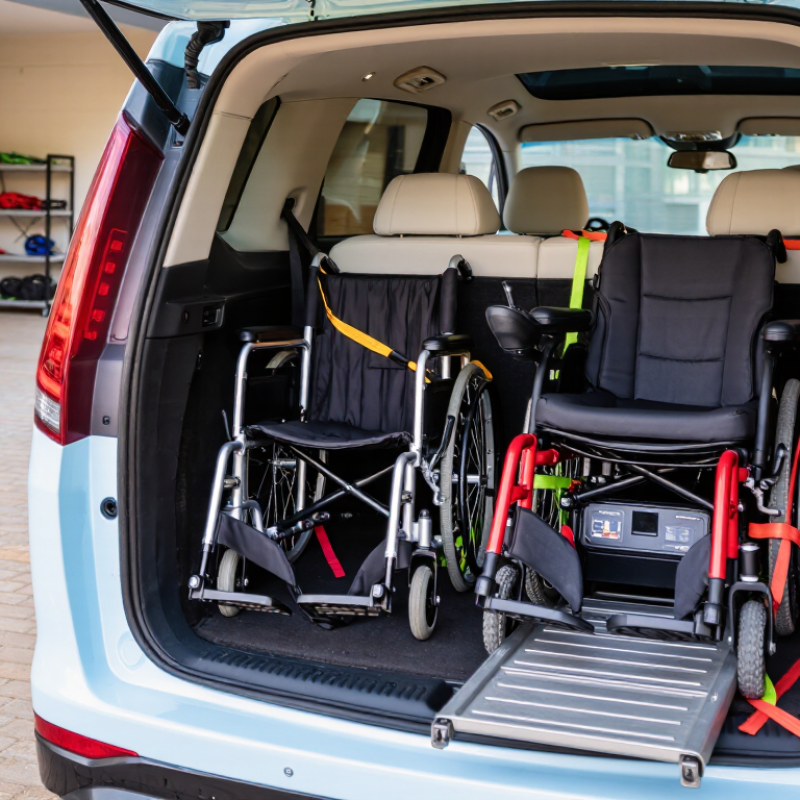
What Is the Best Way to Store and Transport a Wheelchair?

Choosing the Right Storage and Transport Method for a Wheelchair

What Is the Best Way to Store and Transport a Wheelchair?

Choosing the right storage and transport method depends on the wheelchair’s size, weight, folding design, and power system. A lightweight manual wheelchair may fit inside a vehicle with the wheels removed. A heavier model usually needs a suitable loading platform or secured interior space. Measure door openings, trunk depth, and turning clearance before making plans. Guessing often creates trouble.

Keep the wheelchair in a dry, shaded area with enough room for safe movement. Store it upright when possible, and avoid leaning it against fragile parts such as armrests or footrests. For powered models, follow the user manual for battery care and charging. Remove loose cushions and protect control panels from rain, dust, and sharp objects. Small details matter.

Transport requires more than simply making the chair fit. Use strong restraints attached to approved frame points, not removable accessories. Check that brakes engage and wheels remain stable after loading. Never place heavy items on the seat. I once underestimated how quickly a loose footrest could shift during travel; that mistake changed my loading routine. Now, I inspect every latch, strap, and contact point before moving. A professional technician can assess unusual frames, damaged parts, or complex power systems. Still, even expert advice cannot replace careful measurements at home.

What Is the Best Way to Store and Transport a Wheelchair?

Choosing the right method depends on the wheelchair's folded size, weight, protection needs, and available vehicle space.

A folded manual wheelchair usually requires the least storage space, while rigid manual and powered wheelchairs need more room and stronger loading equipment. The figures show approximate floor footprints based on common wheelchair dimensions; always check the wheelchair's actual specifications before selecting a trunk, cargo area, carrier, or securement system.

Preparing a Wheelchair for Safe Storage or Transport

Preparing a wheelchair for storage or transport starts with a careful inspection. Clean mud and moisture from the frame, then dry every joint. Check tires, brakes, footrests, armrests, and battery connections. Loose parts can become projectiles during movement. Remove detachable accessories and label them clearly. Keep them in a padded bag, not beneath heavy luggage.

Battery handling needs special attention. Follow the wheelchair and battery manufacturer’s instructions before disconnecting, removing, or covering terminals. Never guess about charging status or approved packaging. For vehicle transport, use a tested four-point restraint system when available. Secure the frame at its designated points, not by the armrests or footrests. ISO 7176-19 addresses wheelchair systems used as seats in motor vehicles, but it does not replace professional fitting advice.

Air transport adds another risk. The U.S. Department of Transportation’s 2023 Air Travel Consumer Report recorded 11,527 mishandled wheelchairs and scooters, with a reported mishandling rate of 1.5%. Photograph the wheelchair from several angles before handover. Record its dimensions, weight, battery type, and removable components. Ask staff to confirm the handling procedure. I still check twice, even with a checklist. Small omissions matter. Before storage, keep the chair indoors, off damp floors, and away from direct sunlight. Release pressure from folding mechanisms only as the manual permits. A rushed preparation can undo months of careful maintenance.

Folding, Disassembling, and Securing Wheelchair Components

A wheelchair should be folded or disassembled only after checking its user manual. Remove the footrests, cushion, side guards, and battery when permitted. Label each part with simple tape. This prevents confusion during reassembly. Keep bolts in a small sealed pouch. Protect the joystick with a soft cover, not a rigid box that can press the controls. A folded manual wheelchair should rest on its frame, never on delicate hand rims. Heavy power units need two-person lifting or a suitable loading aid. My own handling experience suggests that “light enough” is often a poor estimate.

The WHO and UNICEF Global Report on Assistive Technology (2022) states that more than 2.5 billion people need assistive products worldwide. Reliable transport is part of continued access, not a minor convenience. For vehicle travel, use four-point tiedowns approved for the wheelchair’s design. ISO 7176-19 covers wheelchairs intended for use as seats in motor vehicles, but not every wheelchair has this function. Check the frame markings and manual. Secure removable components separately, especially batteries and leg supports. Keep straps away from wheels, cables, and brake levers. Do not rely on a seat belt to hold the wheelchair itself. After fastening, push the frame gently in several directions. Recheck after the first few minutes. I still miss small details sometimes, especially a loose footrest. That is why a final visual check matters.

Selecting Suitable Vehicles, Ramps, and Restraint Systems

What Is the Best Way to Store and Transport a Wheelchair?

Vehicle choice should match the wheelchair, user, and travel route. The CDC’s 2022 Disability and Health Data System reports that about 13.7% of U.S. adults have a mobility disability. That figure makes accessible transport a daily need, not a niche concern. A vehicle with a low floor, wide doors, and adequate turning space reduces lifting and awkward transfers. Measure the wheelchair’s full height, width, and folded length before choosing a vehicle.

Ramps need careful attention. A gentle slope feels safer than a steep, narrow one, especially on wet ground. Check the ramp’s rated load, side edges, surface grip, and locking points. Never rely on a loose board or improvised extension. Small errors matter. The World Health Organization estimates that 1.3 billion people experience significant disability worldwide, so practical transport design deserves professional planning.

Inside the vehicle, use a four-point wheelchair tie-down system that connects to approved frame locations. Do not attach restraints to removable footrests, armrests, or wheels. The passenger should use a separate, properly positioned occupant restraint. RESNA’s wheelchair transportation standards provide useful technical guidance for securement and crash protection.

Store the chair away from emergency exits, loose luggage, and sharp objects. A final check should confirm locked brakes, secured ramps, charged batteries, and clear restraint paths. I would still recheck everything after the first trip; even a well-planned setup can reveal uncomfortable angles or shifting equipment.

Protecting the Wheelchair During Travel and Long-Term Storage

What Is the Best Way to Store and Transport a Wheelchair?

Protecting the Wheelchair During Travel and Long-Term Storage

Before moving a wheelchair, check the frame, wheels, brakes, and folding joints. Remove cushions, trays, footrests, and other detachable parts when possible. Wrap fragile controls and keep small components in a labeled pouch. During vehicle transport, use approved securement points rather than armrests or footplates. Tight straps should hold the chair firmly without crushing the frame. Never leave it loose in a moving vehicle.

Tips: Use a breathable cover, not a sealed plastic sheet. Store the wheelchair in a dry, shaded room with stable temperatures. Keep it away from leaking pipes, direct sunlight, and dusty workshop floors. For powered models, follow the operating manual before disconnecting or storing the battery. Check tire pressure and battery condition regularly. Do not guess with electrical parts.

Long-term storage needs small inspections. Roll the chair a short distance every few weeks, if safe, to prevent pressure damage and stiffness. Look for rust, cracked rubber, loose bolts, and flattened tires. Clean dirt before storage, but dry every surface completely. A damp cushion can develop an unpleasant odor surprisingly fast. It is easy to focus on the frame and forget the brakes. That mistake can make the chair unsafe after months of storage. If damage appears, have a qualified wheelchair technician inspect it before use.

What Is the Best Way to Store and Transport a Wheelchair? – Protecting the Wheelchair During Travel and Long-Term Storage
Storage or Transport Stage Recommended Method Protection Measures Key Measurements or Conditions Inspection Frequency Risk Level if Neglected
Preparing a manual wheelchair for vehicle transport Fold the chair if designed to fold, remove detachable accessories, and place it in a clean protective cover or padded travel bag. Secure the frame so it cannot slide, prevent contact with sharp objects, and keep the upholstery away from wet or dirty surfaces. Measure the folded length, width, and height before selecting a vehicle compartment. Do not force the chair into a space that compresses wheels or side guards. Before every trip Frame scratches, bent components, damaged upholstery, or unsafe loading.
Transporting a powered wheelchair Use an accessible vehicle lift, ramp, or an approved wheelchair securement system. Follow the wheelchair and vehicle equipment instructions. Apply the parking brake when appropriate, switch off power, protect the joystick, and use designated tie-down points rather than armrests, footrests, or removable parts. Confirm the combined chair and user weight is within the lift or ramp capacity. The chair should not obstruct emergency exits or the driver’s view. Before every trip Movement during braking, equipment failure, electrical damage, or injury.
Air travel with a manual wheelchair Request gate-check or cargo-handling procedures in advance and provide written instructions for folding, battery status, and removable parts. Use a durable padded cover, label detachable components, cushion exposed controls, and photograph the chair before handover. Record the chair’s dimensions, weight, serial or identifying details, and any folding instructions. Requirements vary by aircraft and carrier. Before each flight Loss of parts, impact damage, delayed delivery, or inaccessible mobility equipment on arrival.
Air travel with a powered wheelchair Contact the airline before booking and provide battery type, chair dimensions, weight, and handling instructions. Protect the joystick and other vulnerable controls. For removable batteries, carry and package them according to the airline’s and battery manufacturer’s requirements. Rules vary by battery chemistry, watt-hour rating, aircraft, and local regulations. Never assume a battery is accepted without confirmation. Before each flight Denied boarding, battery damage, fire risk, or delayed mobility support.
Short-term indoor storage Store the wheelchair upright in a dry, clean, low-traffic area with enough clearance for safe access. Keep it away from radiators, direct sunlight, leaking pipes, and cleaning chemicals. Avoid hanging heavy items from the push handles or armrests. Recommended environment: dry and well ventilated, with stable room temperature. Keep ramps and transfer paths unobstructed. Weekly Trip hazards, corrosion, faded upholstery, or accidental damage.
Long-term storage of a manual wheelchair Clean and dry the frame, remove removable cushions, release unnecessary pressure from folded mechanisms, and cover the chair with a breathable fabric cover. Do not use airtight plastic directly against upholstery or metal. Store tires off damp floors when possible and avoid stacking objects on the chair. Check that the storage area is free from condensation and extreme temperature changes. Keep the chair in its normal upright position unless the manufacturer permits another position. Monthly Rust, mildew, tire deformation, stiff folding joints, or degraded upholstery.
Long-term storage of a powered wheelchair Clean and dry the chair, switch it off, store it according to the battery manufacturer’s instructions, and use the prescribed charger only. Keep charging equipment dry and inspect cables for cuts or crushed sections. Do not charge beneath blankets or near flammable materials. Battery storage charge and recharge intervals differ by battery type and model. Follow the owner’s manual rather than using a universal percentage or schedule. Monthly or as specified Reduced battery capacity, deep discharge, electrical faults, or fire risk.
Protecting tires and wheels Remove dirt and moisture, check tire pressure where applicable, and keep wheels aligned and free from obstructions. Do not store tires against solvents, oils, sharp edges, or prolonged direct sunlight. Avoid placing the full chair on a wet or abrasive surface. Use the tire pressure printed on the tire or specified in the owner’s manual. Solid tires do not require inflation but still need inspection for cracks and wear. Monthly Uneven rolling, reduced braking performance, cracking, or difficult steering.
Protecting cushions and upholstery Remove cushions when practical, clean them according to their care instructions, and allow them to dry completely before storage. Store cushions flat or in their recommended orientation. Avoid prolonged compression, moisture, and direct heat. Check for flattened foam, torn covers, moisture, and loss of support. Replace damaged pressure-management components according to clinical guidance. Monthly Reduced comfort, skin-protection problems, odor, mildew, or loss of postural support.
Final inspection before use after storage Uncover the wheelchair, reinstall removable parts, test folding or power functions, and perform a controlled movement check. Inspect brakes, wheels, casters, footrests, armrests, seat belts, joystick, cables, and securement points before placing full weight on the chair. Any loose, cracked, corroded, swollen, frayed, or malfunctioning component should be assessed before use by a qualified technician. Every time it returns to service Unexpected movement, loss of control, falls, or equipment failure.

FAQS

How should I choose a wheelchair storage and transport method?

Consider its size, weight, folding design, and power system. Measure doorways, trunk depth, and turning space before moving it. Guessing often creates trouble.

Where should I store a wheelchair?

Choose a dry, shaded room with stable temperatures. Store it upright when practical, without leaning on armrests or footrests. Keep it away from pipes, sunlight, and dusty floors.

How can I protect a wheelchair during vehicle transport?

Use strong restraints connected to approved frame points. Do not attach straps to armrests, footplates, or removable accessories. The chair must stay firm without crushing the frame.

Which wheelchair parts should I remove before transport?

Remove cushions, trays, footrests, and other detachable parts when possible. Place small pieces in a labeled pouch. This prevents loose parts from shifting during travel.

How should I prepare a powered wheelchair for storage?

Follow the operating manual for charging and battery storage. Protect control panels from rain, dust, and sharp objects. Do not guess with electrical parts.

What should I check before loading a wheelchair?

Inspect the frame, wheels, brakes, folding joints, latches, straps, and contact points. Confirm that brakes engage and wheels remain stable. Small checks matter.

How can I protect a wheelchair during long-term storage?

Use a breathable cover instead of sealed plastic. Check tire pressure, battery condition, rust, loose bolts, and cracked rubber regularly. Roll it briefly every few weeks, if safe.

What mistakes can make stored or transported wheelchairs unsafe?

Never leave a wheelchair loose inside a moving vehicle. Do not place heavy items on the seat. I once underestimated a shifting footrest; now I inspect every restraint twice.

When should a qualified technician inspect the wheelchair?

Seek inspection for damaged frames, unusual designs, loose parts, or complex power systems. Also request help after long storage if brakes or tires seem unreliable. Expert advice helps, but careful home measurements still matter.

Conclusion

Choosing the right storage and transport method is essential for keeping a wheelchair safe, clean, and ready for use. To understand how to store and transport a wheelchair properly, first consider its size, weight, design, and the available space in your home or vehicle. Before storage or travel, remove personal items, check the tires, brakes, and movable parts, and clean and dry the chair thoroughly. If possible, fold the wheelchair or disassemble removable components according to its instructions. Secure loose parts separately so they do not shift, scratch surfaces, or become damaged.

For transportation, select a vehicle with enough room and use suitable ramps, lifts, tie-downs, or restraint systems designed to prevent movement. The wheelchair should remain stable without placing pressure on fragile components. During long-term storage, keep it indoors in a dry, cool area away from direct sunlight, moisture, dust, and extreme temperatures. Cover it with breathable material, avoid stacking heavy objects on top, and inspect it periodically to maintain its condition.

Isabella

Isabella

Isabella is a dedicated marketing professional with a sharp focus on driving brand growth and engagement through strategic content creation. With an extensive background in digital marketing, she combines her passion for storytelling with her keen understanding of industry trends to deliver......