Wheelchairs are daily mobility equipment, not merely transport devices. Their push rims, armrests, cushions, and footplates collect skin oils, dust, food particles, and microorganisms. Learning how to clean and sanitize a wheelchair effectively therefore protects users, caregivers, and shared-care environments.
The World Health Organization’s 2022 Global Report on Assistive Technology estimates that more than 2.5 billion people need assistive products worldwide. That number may exceed 3.5 billion by 2050. Wheelchair hygiene will matter even more as equipment is shared across homes, clinics, schools, and rehabilitation centers. The CDC classifies wheelchairs as noncritical equipment when they contact intact skin. Infection-prevention expert William A. Rutala explains, “Noncritical items are those that come in contact with intact skin but not mucous membranes.” This classification still requires careful cleaning and appropriate disinfection.
Effective practice begins with removing visible soil using detergent and water. Wipe the joystick, brake handles, armrests, and wheels separately. Dry cushions thoroughly, especially around seams. Then apply an EPA-registered disinfectant compatible with the wheelchair’s materials. Follow the label’s contact time. Do not wipe it away too soon. That mistake is common. It can reduce disinfection performance.
The CDC’s environmental infection-control guidance emphasizes cleaning before disinfection. However, it does not provide a complete wheelchair-specific routine for every model. Manufacturers may recommend different products for vinyl, aluminum, rubber, or electronic controls. This guide connects infection-control principles with practical wheelchair-care experience. It also acknowledges an uncomfortable truth: a visibly clean wheelchair may still carry contamination in hidden joints, undersides, or cushion seams. Regular inspection remains essential.
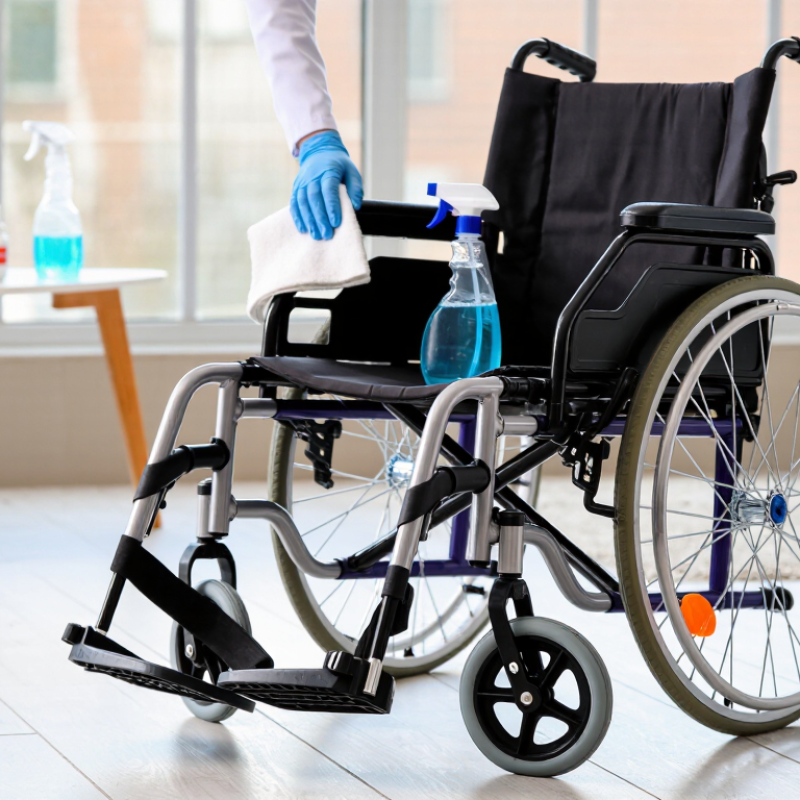
How to Clean and Sanitize a Wheelchair Effectively
Cleaning a wheelchair safely starts with its manual, not a bucket of water. The manual identifies safe cleaners, drying limits, and removable parts. It may also specify battery handling and electrical protection. Powered models require extra caution. Before wiping, switch off the chair and disconnect the charger. Remove the battery only when the manual permits it. Never guess. The CDC’s 2022 National and State Healthcare-Associated Infection Progress Report states that one in 31 hospital patients has an infection linked to healthcare. That figure does not measure wheelchair contamination. It does show why shared-contact equipment deserves disciplined hygiene.
Use a clean, lightly dampened cloth on frames, armrests, footplates, and push handles. Keep liquid away from joysticks, charging ports, seams, and battery housings. Do not spray disinfectant directly onto electronics. Apply it to the cloth instead, then follow the product’s stated contact time. A surface can look dry while remaining chemically active. Dry every area before reconnecting power. Check for cracked insulation, loose covers, corrosion, or trapped moisture. If the manual is unclear, pause and contact a qualified mobility technician. Guessing can damage a control system. That is an easy mistake to underestimate.
Tips: Photograph cable positions before removing anything. Clean high-touch areas more often in shared settings. Use separate cloths for wheels and hand-contact surfaces. Do not return the chair to service until all parts are completely dry.
| Component or Area | Preparation | Cleaning Method | Sanitizing Method | Drying and Safety Requirements | Suggested Frequency |
|---|---|---|---|---|---|
| Manual and manufacturer instructions | Read the wheelchair manual before using water, detergents, disinfectants, or removing parts. | Identify approved products, removable upholstery, cleaning restrictions, and components that must remain dry. | Use only a sanitizer or disinfectant that the manual and product label allow for the specific surface. | Required before cleaning Do not rely on a general cleaning method if the manual gives different instructions. |
Before the first cleaning and whenever the cleaning product or wheelchair configuration changes. |
| Battery, charger, joystick, and electronics | Switch off the power, unplug the charger, and isolate or remove the battery only if the manual permits it. | Wipe with a lightly dampened cloth. Keep liquids away from ports, switches, seams, connectors, and control housings. | Apply a compatible disinfectant to the cloth rather than spraying directly onto electronic components. | Never immerse or pressure-wash Allow the surface to dry completely before reconnecting the battery or charger. |
After shared use, visible contamination, or contact with respiratory or bodily fluids. |
| Frame, handles, arm supports, and push rims | Remove loose dirt with a dry or slightly damp microfiber cloth. | Use warm water with a small amount of mild detergent. Wipe from cleaner areas toward dirtier areas. | Use a surface-compatible, label-approved disinfectant and keep the surface visibly wet for the label's required contact time. | Wipe away excess moisture, especially around joints, fasteners, and moving parts. Do not mix cleaning chemicals. | At least daily for frequent use; immediately when visibly soiled. |
| Seat, backrest, and cushions | Remove cushions or covers only when permitted. Shake or vacuum loose debris outdoors or in a well-ventilated area. | Clean fabric, vinyl, or molded surfaces according to the material and manual. Blot fabric instead of scrubbing aggressively. | Use a disinfectant labeled for the upholstery material. Do not saturate foam or fabric unless the manual specifically permits wet disinfection. | Dry completely before use to reduce odor, material damage, and skin irritation. Check for tears or compressed padding. | Weekly for routine use; after spills, incontinence, or shared use. |
| Footrests, calf supports, and leg rests | Remove detachable parts if allowed and place them on a clean, stable surface. | Wash hard surfaces with mild detergent and water. Clean crevices with a soft brush. | Apply a compatible disinfectant after visible soil has been removed. Follow the product's stated wet contact time. | Rinse only when required by the product label, then dry thoroughly before reattachment. | Weekly and after contact with dirt, food, or bodily fluids. |
| Wheels, tires, and casters | Inspect for embedded debris, hair, and thread before wiping. | Use a damp cloth and mild detergent. Use a soft brush around caster forks and wheel hubs without forcing water into bearings. | Disinfect touch points such as hand rims and wheel locks with a compatible product. | Keep brakes and bearings free of excess liquid. Test wheel movement and wheel locks after drying. | Weekly; inspect more often in outdoor, wet, or gritty environments. |
| Wheel locks, brakes, and adjustment levers | Engage the brakes before cleaning and keep the wheelchair stable. | Wipe with mild detergent solution and remove dirt from hinges and contact points with a soft brush. | Use a compatible disinfectant on external touch surfaces while avoiding excessive liquid near moving mechanisms. | Confirm that both brakes engage securely and release correctly before the wheelchair is used. | Daily visual check; clean after visible contamination or shared use. |
| Safety belt, harness, and straps | Inspect for fraying, damaged stitching, broken buckles, and contamination. | Clean according to the strap material and manual. Use mild detergent and avoid harsh scrubbing. | Use only a disinfectant approved for the belt or harness material; some chemicals can weaken fibers. | Air-dry fully. Do not use a damaged restraint, and do not put it back into service while damp. | Weekly and after every spill or bodily-fluid contamination. |
| High-touch accessories Tray, lap desk, phone holder, and cushion handles |
Remove accessories when possible and separate items that require different cleaning methods. | Wash hard, nonporous surfaces with mild detergent before disinfection. | Use a product labeled for the surface and maintain the label-specified contact time. | Dry completely. Do not return shared accessories until they are clean and dry. | After each shared use; otherwise daily or when visibly soiled. |
| Body-fluid contamination | Wear disposable gloves and additional protective equipment appropriate to the spill. Keep other people away from the area. | Remove visible material with disposable absorbent towels, then clean with detergent and water. | Use a disinfectant labeled for the relevant pathogen or bodily-fluid contamination and follow its contact time. | Dispose of waste according to local requirements. Remove gloves safely and wash hands after cleaning. | Immediately Do not use the wheelchair until the affected area is cleaned, disinfected, and dry. |
| Final inspection and return to service | Confirm that all removable parts are reinstalled correctly and that the battery or electronics are isolated as required during cleaning. | Check for missed soil, residue, loose hardware, damaged upholstery, and trapped moisture. | Verify that disinfectant residue has been handled according to the product label. | Safe when dry and functional Test brakes, wheels, footrests, controls, and essential safety features before use. |
After every thorough cleaning or repair-related cleaning. |
Dirt can block disinfectant contact. Clean skin oils, crumbs, and dust first. Cleaning comes before disinfecting.
Focus on hand rims, push handles, brakes, armrests, footrests, and controls. These areas receive frequent hand contact.
Follow the product label’s contact time. Keep the surface visibly wet throughout that period. Do not wipe it dry too soon.
Remove cushions, bags, and supports before cleaning. Follow their care instructions. Reinstall them only after all surfaces dry fully.
No. Check material compatibility first. Upholstery may fade, stiffen, or retain moisture.
Use a 1,000 ppm chlorine solution only on compatible, nonporous surfaces. Metal may corrode. Electronics can fail.
Keep liquid away from joysticks, charging ports, batteries, seams, and exposed wiring. Apply disinfectant to a cloth when direct spraying seems risky.
Never mix disinfectants with other cleaners. Change dirty cloths between sections. I have rushed this step before; the chair looked clean, but the contact time was incomplete.
Pause and check the care instructions. Test an unseen area if appropriate. Ask a qualified professional when the material remains unclear.
Clean it after each user when contamination is possible. Inspect cracks, peeling covers, and hidden joints. Small gaps can hold moisture and dirt.
This guide explains how to clean and sanitize a wheelchair effectively while protecting the user, equipment, and caregiver. Begin by reading the wheelchair’s manual and identifying components that should not be exposed to moisture. Remove or isolate batteries, controllers, charging ports, and other electronic parts whenever possible. Before applying any disinfectant, remove visible dirt, dust, food residue, and bodily soil with an appropriate cleaner, since disinfection is less effective on unclean surfaces.
Next, use an authorized disinfectant according to its label, keeping every applicable surface wet for the complete required contact time. A 1,000 ppm chlorine solution may be used only on materials confirmed to tolerate it, as it can damage certain finishes, fabrics, metals, or electronics. After treatment, allow the chair to dry fully, inspect it for residue, corrosion, loose parts, or mechanical problems, and confirm that essential functions operate safely. Document the cleaning and inspection before returning the wheelchair to service.

 Kidvora Chair