In today's world, power mobility devices play a vital role for many individuals, providing crucial independence. However, battery life can often be a concern. Understanding how to increase battery life in power mobility devices is essential for users to maximize their experience. By taking simple yet effective steps, users can ensure their devices run longer and more efficiently.
Many factors influence battery longevity, from charging habits to maintenance practices. Users often overlook these aspects, leading to unexpected downtime. For instance, using the right charger can make a significant difference. Moreover, regular maintenance can prevent operational issues that drain the battery. Each user’s journey with their device is unique, and addressing these factors can lead to meaningful improvements.
While there are numerous tips available, it’s essential to reflect on personal usage patterns. Sometimes, we may not recognize habits that negatively impact battery life. Acknowledging this can open doors to better strategies. Knowledge about battery management empowers users to achieve their mobility goals more effectively, enhancing their overall quality of life.
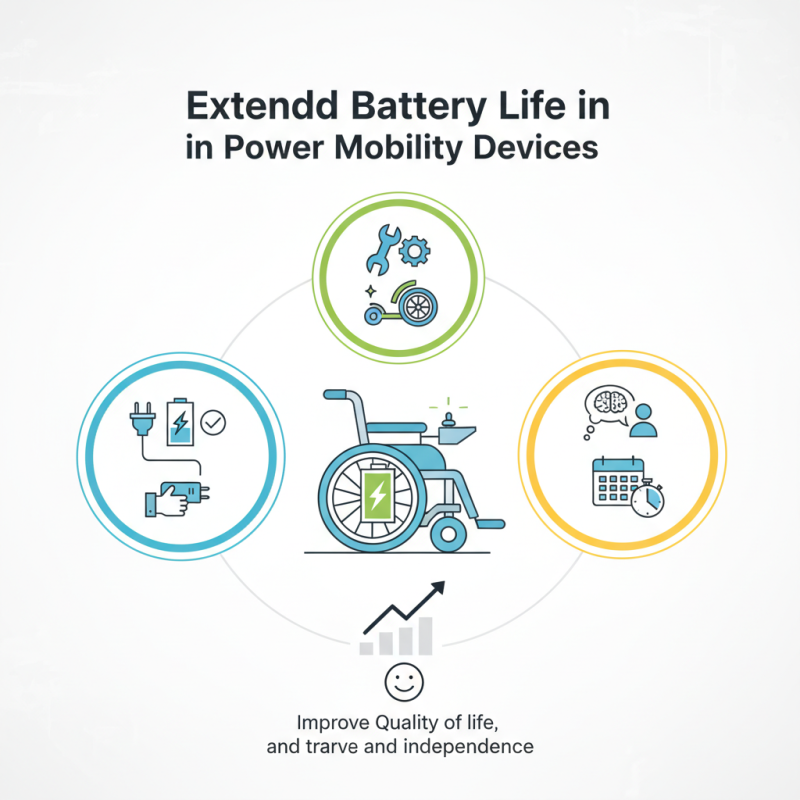
Battery technology plays a crucial role in the performance of power mobility devices. Lithium-ion batteries dominate this market due to their high energy density. Research indicates that these batteries can provide more than 500 charging cycles, which is essential for daily use. However, users often encounter issues with battery longevity and efficiency.
Understanding how to care for lithium-ion batteries is vital. Temperature fluctuations can severely impact battery life. Studies show that keeping batteries between 20°C to 25°C increases their lifespan. Regular maintenance, such as avoiding deep discharges, can also enhance performance. Reports find that batteries lose about 20% of their capacity after just two years if not maintained correctly. It's crucial to monitor charging habits as well.
Misconceptions exist about battery usage, often leading to suboptimal practices. For instance, many users believe it's best to charge their devices overnight. This habit can contribute to overheating, thereby shortening battery lifespan. Awareness of these practices is essential. Users should question their routines and reflect on how they can improve battery management for better performance.
| Battery Type | Capacity (Ah) | Voltage (V) | Average Life Span (Years) | Charging Time (Hours) | Maintenance Tips |
|---|---|---|---|---|---|
| Lead Acid | 35 | 24 | 1-3 | 8-10 | Avoid deep discharges; keep terminals clean |
| Lithium-Ion | 20 | 24 | 3-5 | 5-7 | Do not overcharge; store in a cool place |
| Nickel-Metal Hydride | 30 | 24 | 3-4 | 6-8 | Regularly discharge fully; avoid high temperatures |
: Optimizing operational efficiency can increase battery longevity by up to 30%. Features like regenerative braking recharge the battery during deceleration.
Smart technology monitors usage patterns, adjusting energy consumption. This can reduce energy usage by about 20%.
Regular updates provide access to the latest energy-saving improvements. Users often overlook this, missing potential benefits.
Regularly check connections, avoid overcharging, and store in moderate temperatures. Simple tasks can prevent performance issues.
Overcharging shortens battery lifespan. Using a timer can help maintain battery integrity by preventing excessive charging.
Lithium-ion batteries are lighter and last longer, making them ideal for daily use. Consider your mobility needs.
Lead-acid batteries are affordable but heavier and may not provide the range needed for frequent use.
Batteries perform better in moderate temperatures. Extreme heat or cold can negatively impact their efficiency.
Neglected maintenance can reduce battery life and overall mobility. Regular checks are essential but often forgotten.
Charging frequency impacts battery health. Frequent charging may wear out batteries faster, affecting performance over time.
To understand how to increase battery life in power mobility devices, it's essential to grasp the underlying battery technology. Knowledge of different battery types, including their chemistry and performance characteristics, aids users in making informed choices tailored to their specific mobility needs. Moreover, optimizing charging practices—like avoiding complete discharges and ensuring proper charging cycles—can significantly enhance battery longevity.
Implementing energy-saving features within mobility devices, such as adjustable speed settings and automated power-off mechanisms, can further conserve battery life. Regular maintenance, including cleaning terminals and checking connections, is paramount for sustaining optimal battery performance. By focusing on these strategies, users can effectively extend the lifespan and efficiency of their power mobility devices, ensuring they remain reliable and efficient for daily use.

 Kidvora Chair