Choosing a wheelchair is not only about comfort, appearance, or price. The ground beneath the wheels can change everything. Smooth hospital floors, cracked sidewalks, loose gravel, wet grass, steep ramps, and sandy paths create different mobility demands. A chair that feels stable indoors may become difficult to control outdoors.
For readers asking “what terrain is suitable for different wheelchair types,” this guide offers a practical starting point. Manual wheelchairs often suit level indoor floors and paved paths, especially when their tires and frame match the user’s strength. Power wheelchairs can support longer outdoor travel, but turning space, battery range, slope limits, and weather protection matter. All-terrain models may handle grass, compact trails, and uneven ground better, although they can feel heavier and less responsive on narrow indoor surfaces.
Dr. Rory Cooper, a wheelchair researcher and rehabilitation expert, has emphasized, “A wheelchair is not a chair; it is a mobility device.” That distinction deserves attention. The correct choice should support movement, posture, safety, and daily independence, not merely provide a seat. An occupational therapist, rehabilitation professional, or qualified wheelchair supplier can assess real routes and transfer needs. Try the chair on the surfaces you actually use. A showroom floor can hide serious problems.
The categories are not perfect. Weather, maintenance, body strength, and personal confidence can change performance. These five tips will compare wheelchair types by terrain, while recognizing that individual fitting remains essential.
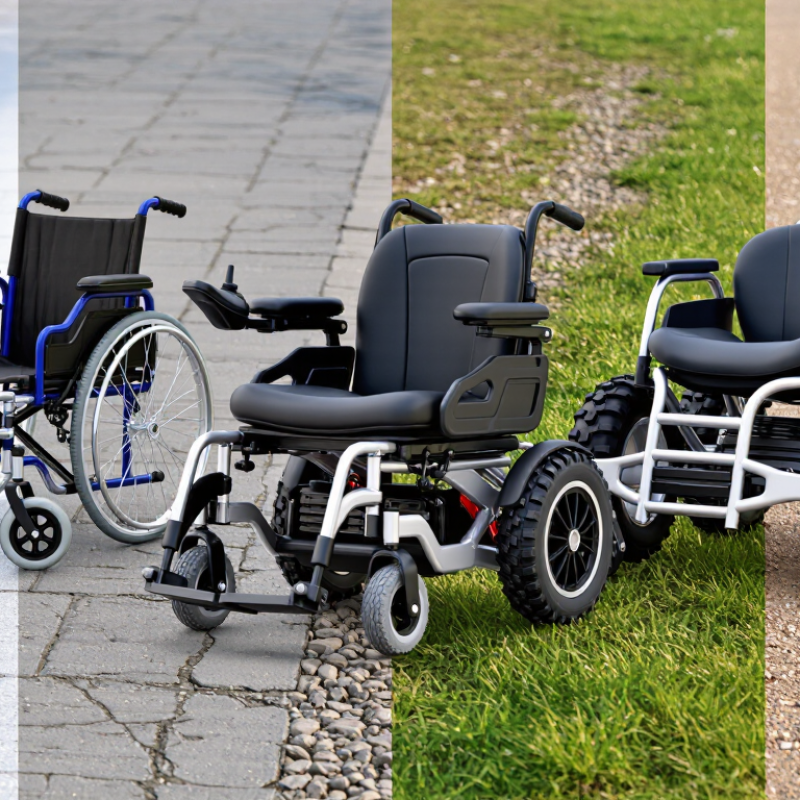
Identify the terrain before comparing wheelchair features. Indoor floors, cracked sidewalks, gravel paths, wet ramps, and steep slopes create different demands. Measure doorway widths and check turning space at home. Outdoors, observe curbs, loose stones, grass, and drainage grates. A smooth-looking route may still hide difficult transitions. I once underestimated a shallow curb, and the front wheels caught unexpectedly. That experience changed how I inspect familiar paths.
Map your route. Test it safely.
Surface conditions matter as much as terrain shape. Wet tiles can reduce traction, while deep carpet may resist small wheels. Loose gravel can make steering tiring, even with strong upper-body control. A lightweight chair may be practical indoors but less stable on rough ground. This is where personal testing matters. Borrowing or trialing a chair on your actual route can reveal problems specifications miss. Reconsider seasonal changes, too. Snow, fallen leaves, and rainwater may transform the same path within hours.
5 Tips for Choosing Wheelchair Types by Terrain?
Match Wheelchair Wheel Types to Outdoor and Indoor Ground
Wheelchair choice should follow the ground, not only the user’s indoor routine. Smooth floors suit smaller front casters and compact rear wheels. They turn easily around kitchen corners and narrow doorways. However, thick carpets can increase pushing resistance. A lightweight chair may feel less effortless than expected. Tip 1: Test the chair on the actual flooring.
Tip 2: For cracked sidewalks, choose larger front casters with durable tires. They handle small gaps and uneven paving more smoothly. Tip 3: Gravel and grass usually require wider wheels and stronger traction. Pneumatic tires can improve comfort, but they need regular pressure checks. One detail is easy to miss. Low pressure may make steering harder. Excessive pressure may reduce grip.
Tip 4: Wet ramps and polished surfaces demand controlled braking and reliable wheel contact. Ask a qualified seating specialist to check stability, posture, and transfer safety. Tip 5: For mixed terrain, avoid choosing the most rugged setup automatically. Large wheels may perform well outdoors but feel awkward indoors. Measure door thresholds, elevator spaces, and turning areas before purchasing. A short trial across tile, carpet, pavement, and grass can expose problems quickly. Terrain changes throughout the day. Your wheelchair should handle those changes without forcing unnecessary effort.
Match wheelchair wheel types to the surfaces you use most often. This generalized suitability rating reflects typical wheelchair characteristics; exact performance depends on tire size, suspension, motor power, user weight, and local conditions.
Rating: 1 = poor suitability, 5 = excellent suitability. Standard and transport wheelchairs are generally best for smooth indoor surfaces and maintained pavement, while all-terrain and powered models are better suited to gravel, grass, and uneven outdoor paths.
Choose the Right Frame for Stability, Comfort, and Maneuverability
Terrain changes how a wheelchair frame performs. Smooth indoor floors need easy turning, while gravel demands stronger stability and controlled movement. A rigid frame can feel responsive on pavement, but uneven paths may transmit more vibration. A folding frame offers practical storage, though it can feel less precise during sharp turns.
Match the frame to your daily routes. Measure doorways, ramps, sidewalks, and floor surfaces. For grass or loose gravel, wider tires and a stable wheelbase may improve control. However, too much width can make narrow hallways frustrating. I have seen users focus on outdoor performance and later struggle indoors.
Treat comfort as a fitting issue, not a cushion issue alone. Seat width, back angle, footrest position, and center of gravity affect posture and fatigue. A seating professional should assess these details with you, preferably during real movement. A frame that feels comfortable for ten minutes may become tiring after several hours.
Test maneuverability before choosing. Turn beside a table, cross a small threshold, and stop on a gentle slope. Notice vibration, hand position, and braking effort. Ask whether the frame remains predictable when tired. The “best” option is not always the lightest one. Personal measurements, terrain, and transfer ability matter more than general ratings.
Choosing between a manual and powered wheelchair depends heavily on the terrain around you. A smooth indoor floor may suit either type, but gravel, grass, slopes, and broken sidewalks demand more planning. Check the ground near your home, workplace, and regular routes. Small cracks can become serious obstacles.
Manual wheelchairs are often lighter and easier to transport. They can work well on firm pavements and smooth indoor surfaces. However, loose gravel may increase rolling resistance and strain the user’s shoulders. A powered wheelchair usually offers stronger assistance on longer routes, ramps, and uneven outdoor paths. Larger drive wheels and suitable ground clearance can improve stability, but they also add weight. More power does not remove every risk.
Consider five practical points: surface condition, slope, distance, turning space, and transport needs. Test the chair on a real route, not only in a showroom. Ask a qualified occupational therapist or rehabilitation specialist to assess posture, control, and safe braking. Check battery range under realistic conditions, including hills and cold weather. I once underestimated a short grassy section; it drained more effort than expected. That mistake changed my route planning. Manual users may need planned rest points, while powered users should carry charging information and inspect tire pressure regularly. Features can help, but poor fitting still causes discomfort. Terrain changes. Your needs may change too.
| Terrain | Manual Wheelchair | Powered Wheelchair | Main Benefits | Potential Challenges | Selection Tip |
|---|---|---|---|---|---|
| Indoor floors and smooth pavements | Usually easy to maneuver, especially with a lightweight frame and smaller turning radius. | Provides consistent movement with joystick control and generally requires less upper-body effort. | Good maneuverability, efficient daily use, and easier access through suitable doorways. | Thick carpets, narrow corridors, thresholds, and tight bathroom layouts may restrict movement. | Measure doorways and turning spaces. Choose solid or appropriately sized tires for the flooring. |
| Grass and compacted park paths | Can work on short, firm grass when the user has adequate strength or assistance; larger rear wheels may help. | Typically offers better traction and reduced physical effort when equipped with suitable outdoor tires. | Powered drive can improve consistency on uneven grass and longer outdoor routes. | Soft grass increases rolling resistance; manual users may need help on slopes or long distances. | Check ground firmness, slope, and drainage. Prefer an outdoor-rated configuration for frequent use. |
| Gravel and uneven hard-packed trails | Possible with durable pneumatic or hybrid tires, but steering and propulsion require more effort. | Usually more suitable because powered torque and larger drive wheels can handle moderate surface variation. | Improved traction, less fatigue, and more stable progress over small surface irregularities. | Loose stones can reduce stability, increase vibration, and make narrow wheels sink or deflect. | Review the manufacturer’s maximum slope and surface guidance; avoid deep or loose gravel. |
| Wet surfaces and light rain | Can be used cautiously, but wet surfaces may reduce tire grip and braking control. | May provide controlled speed settings, but electrical components require protection from water exposure. | Speed control and stable seating can support careful travel on damp, paved routes. | Hydroplaning, slippery ramps, corrosion, and water damage are possible risks. | Use only within the chair’s water-resistance guidance and slow down on painted markings, ramps, and slopes. |
| Steep slopes and curb transitions | Requires substantial strength, balance, and technique; assistance may be necessary. | Can reduce propulsion effort, but stability and safe slope limits vary by design and configuration. | Controlled acceleration and braking can support graded routes when used within rated limits. | Tip-over risk, loss of traction, and curb impact can cause serious injury or equipment damage. | Never exceed the rated slope. Use accessible ramps rather than curbs and seek professional seating advice. |
| Sand, mud, and soft ground | Generally difficult because small casters and narrow tires can sink or become stuck. | May perform better with specialized wide tires or track systems, but ordinary models may also bog down. | Specialized outdoor configurations can improve flotation and traction in limited conditions. | High resistance, battery consumption, wheel clogging, and recovery difficulties are common. | Treat soft ground as a specialist-use condition; confirm compatibility before attempting it. |
Tip 1: Match the wheelchair to your daily ground conditions. Smooth indoor floors may suit smaller front casters, while gravel requires stronger, larger wheels. Wet paths and steep ramps demand reliable brakes and anti-tip supports. Ask a qualified therapist to assess posture, balance, and pressure needs. Fit matters more than appearance.
Tip 2: Check safety features before comfort extras. Test the brakes on a slight slope, if safely possible. Confirm that footrests lock firmly and arm supports do not wobble. A seat belt can improve positioning, but it should never replace supervision or proper fitting. I once underestimated curb height; that mistake changed how carefully I inspect access routes.
Tip 3: Learn the maintenance routine. Mud can block casters, and low tire pressure increases pushing effort. Check tire condition, wheel fasteners, cushions, and brake cables regularly. Keep a simple inspection record. It takes minutes. Follow the care instructions for cleaning and storage.
Tip 4: Consider repair access. Some terrain-friendly parts wear faster, especially casters used on rough paths. Ask how replacements are sourced and how adjustments are performed. Maintenance needs are easy to ignore during a showroom test.
Tip 5: Measure transport space before choosing. Foldable models may fit a car trunk, while rigid frames can offer stability but need more room. Check lifting weight, tie-down points, and ramp clearance. A chair that handles trails well may be difficult to load alone. I would measure twice.
Inspect indoor floors, cracked sidewalks, gravel, grass, ramps, curbs, and drainage grates. Measure doorways and turning spaces. A smooth route can hide difficult transitions.
Larger front casters usually cross small gaps and broken pavement more smoothly. Durable tires can reduce disruption from sharp stones. Test the chair first.
They can improve comfort and traction on loose ground. However, check tire pressure regularly. Low pressure may make steering difficult, while high pressure may reduce grip.
Wet tiles and ramps require reliable wheel contact and controlled braking. Ask a qualified seating specialist to assess stability, posture, and braking needs.
Not automatically. Wider wheels may perform well outdoors but feel awkward in narrow hallways. Test tile, carpet, pavement, and grass before deciding.
A rigid frame may feel responsive on pavement but transmit more vibration. A folding frame stores easily, though sharp turns may feel less precise.
Turn beside a table, cross a small threshold, and stop on a gentle slope. Notice vibration, hand position, braking effort, and fatigue.
It may work well indoors but feel less stable on gravel or grass. Weight alone is not enough. Personal measurements and route conditions matter more.
Rainwater, fallen leaves, and snow can transform a familiar path within hours. Recheck traction, drainage, slopes, and curb transitions. Conditions are imperfect.
Seat width, back angle, footrest position, posture, and center of gravity affect daily control. A ten-minute trial may not reveal several hours of fatigue.
Choosing the right wheelchair begins with understanding the terrain and surface conditions you will encounter most often. Consider whether you will travel across smooth indoor floors, uneven sidewalks, grass, gravel, slopes, or narrow spaces. The question “what terrain is suitable for different wheelchair types” can guide your decision: smaller front wheels may support indoor maneuverability, while larger wheels and stronger tires are often better for outdoor surfaces. Frame design also matters, as a stable yet lightweight structure can improve comfort, balance, and turning control.
Manual and powered wheelchairs each offer advantages depending on distance, strength, and terrain difficulty. Powered models may reduce physical effort on inclines and rough ground, while manual options can be practical for users who value portability and active movement. Before choosing, review braking systems, seating support, tire durability, battery or mechanical maintenance, folding features, and transport space. A suitable wheelchair should provide dependable safety, comfortable positioning, and reliable performance in the environments where it will be used.

Kidvora Chair